October 1st, 2026orthodontic treatment loan
Orthodontic Treatment Loan or Savings: What Works?
A straighter smile can be something you've wanted for years. Maybe you've been thinking about braces since your teenage years, or perhaps you're now considering clear aligners as an adult. For parents, the decision may be about helping a child correct crowded teeth, bite problems or jaw alignment while they're still growing.
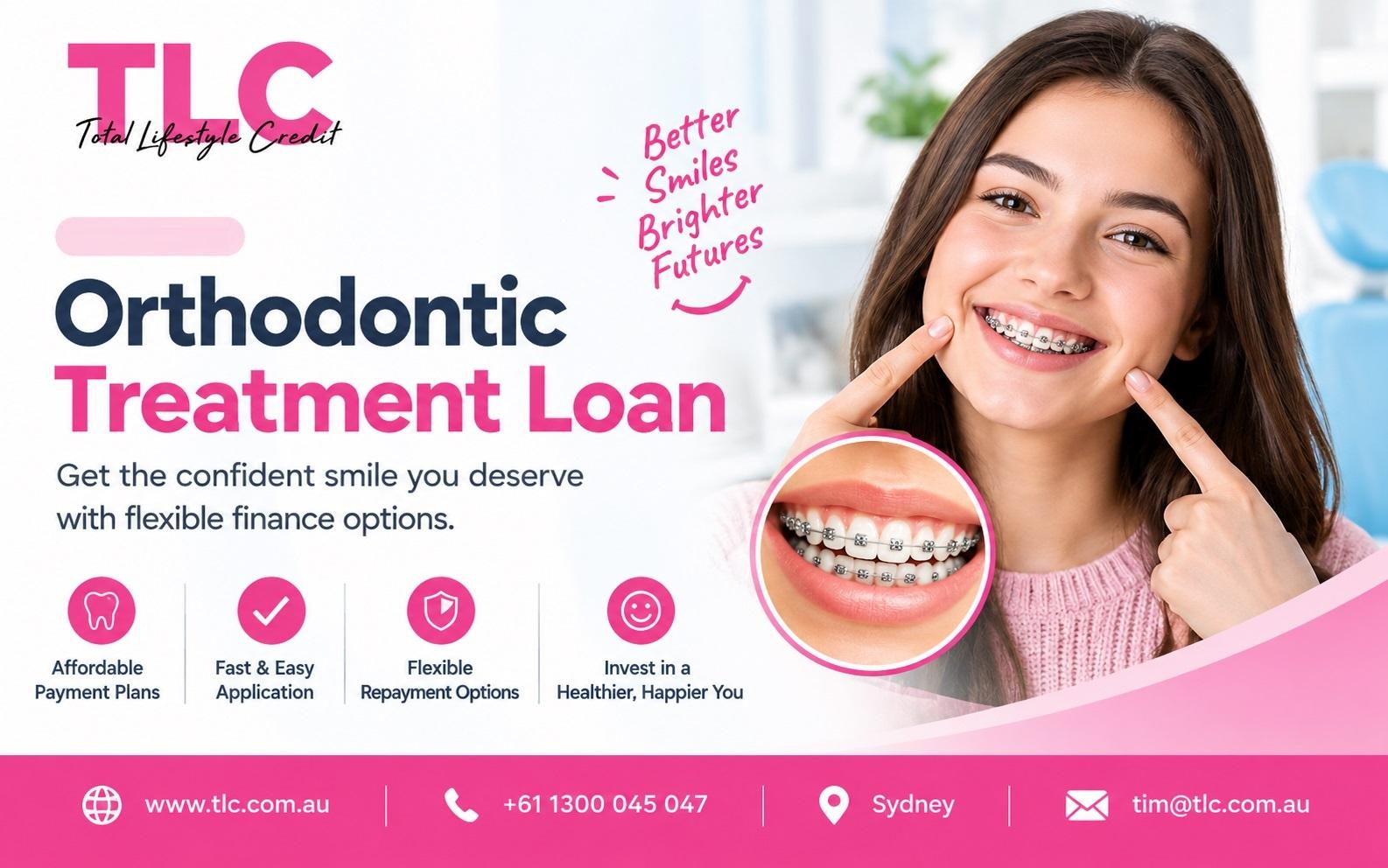
Whatever the reason, orthodontic treatment is a commitment. It involves appointments, adjustments, follow-up care and, of course, a financial investment.
That often leads to an important question: Should you use your savings to pay for orthodontic treatment, or should you consider an orthodontic treatment loan?
There isn't one answer that works for everyone. Using savings can help you avoid borrowing costs, while financing may allow you to spread the expense and keep more of your savings available for emergencies and other priorities.
The right choice depends on your treatment cost, financial position, savings, income and comfort with repayments.
This guide looks at both options so you can have a clearer conversation with your orthodontist and make a financial decision that suits your circumstances.
What Does Orthodontic Treatment Involve?
Orthodontics is a specialised area of dentistry that focuses on correcting the position of teeth and jaws. Treatment isn't limited to creating a straighter-looking smile. It can also address problems with the bite, crowded teeth, gaps and certain jaw alignment issues.
Common orthodontic options include:
Traditional metal braces
Ceramic or tooth-coloured braces
Clear aligners
Retainers
Other orthodontic appliances recommended by a qualified professional
Health direct explains that orthodontic treatment can be used to straighten teeth and correct bite problems, with treatment plans developed according to the individual's needs.
Treatment can take considerable time. Depending on the individual situation, braces or aligners may need to be used for months or years, followed by retainers to help maintain the result.
That longer treatment period is one reason it makes sense to think about the financial side before treatment begins.
Why Can Orthodontic Treatment Be Expensive?
One of the first things to understand is that the cost of orthodontic treatment isn't necessarily just the price of the braces or aligners.
Your overall treatment cost may include:
Initial orthodontic consultation
Dental examinations
X-rays and digital scans
Treatment planning
Braces or clear aligners
Regular adjustment appointments
Replacement or additional appliances
Retainers
Follow-up reviews
Health direct recommends asking the orthodontist whether the quoted price includes items such as assessments, imaging, regular consultations, orthodontic appliances, retainers and follow-up care.
Before deciding how to pay, ask for a detailed treatment quote. Knowing the expected total gives you a much better starting point for comparing savings with finance.
Paying for Orthodontic Treatment With Savings
If you've been putting money aside specifically for dental or orthodontic treatment, using your savings may feel like the most straightforward option.
You already have the money. There is no new loan application, and you don't have to add another monthly repayment to your household budget.
For some people, that simplicity is very appealing.
Potential advantages of using savings
Paying from your savings can mean:
You don't take on additional debt.
You don't pay interest on the amount you already have saved.
There is no new monthly loan repayment.
You can pay for treatment without undergoing a lending assessment.
You know exactly how much money you're spending.
But there's an important question to ask before transferring a large amount of money from your savings.
How much will you have left afterwards?
Don't Forget About Your Emergency Fund
Savings aren't only for planned expenses.
Your savings may also be your financial safety net if your car needs an unexpected repair, your household has an urgent expense or your income changes.
For example, imagine a family has $15,000 saved and orthodontic treatment will cost $10,000.
Paying the treatment in full would leave $5,000.
That may be perfectly manageable for one family but uncomfortable for another. It depends on income, existing commitments and how much emergency savings the household wants to maintain.
Before using your savings, consider the bigger picture rather than looking only at the treatment bill.
Ask yourself:
How much will I have left after paying for treatment?
Do I have separate emergency savings?
Do I have other large expenses coming up?
Could I comfortably handle an unexpected bill?
How long would it take me to rebuild my savings?
If using most of your savings would leave you financially exposed, it may be worth exploring other options.
Considering an Orthodontic Treatment Loan
A orthodontic treatment loan provides another way of approaching the expense.
Instead of paying the complete treatment cost from your savings, an approved applicant can borrow an amount and repay it over an agreed period.
For someone who has limited available cash or doesn't want to use most of their savings, spreading the cost may make the expense easier to incorporate into their regular budget.
TLC currently offers dental payment plans from $2,001 to $70,000, subject to lending and approval criteria. Payment terms range from 24 to 84 months, with interest rates, fees and charges depending on the individual application.
However, financing also has a cost. The total amount repaid can be higher than the amount originally borrowed because of interest and applicable fees.
That's why a loan should be considered as a financial commitment rather than simply a way to delay paying a bill.
Why Might Someone Consider Financing?
An orthodontic treatment loan may be worth exploring if you want to:
Spread the treatment cost over an agreed period
Keep more of your savings available
Avoid using a large amount of cash at once
Create a predictable repayment schedule
Manage orthodontic expenses alongside other household costs
This doesn't mean financing is automatically better than using savings. It simply gives you another option to consider.
The key is to compare the total financial impact of both choices.
Orthodontic Treatment Loan vs Savings: What Should You Compare?
If you're trying to decide between the two, don't focus on one number.
Look at several parts of your financial situation.
1. Your available savings
Start by looking at how much you actually have available.
If paying for treatment would use only a small portion of your savings, paying upfront may be comfortable.
If it would consume most of your emergency fund, financing could be worth investigating.
2. The total cost of borrowing
If you consider an orthodontic treatment loan, don't look only at the advertised monthly repayment.
Find out:
How much you are borrowing
The interest rate
Applicable fees
The repayment period
The regular repayment amount
The total amount payable
A longer loan term may make individual repayments easier to manage, but it can also affect the total amount you pay over the life of the loan.
TLC states that interest rates differ depending on factors including the information provided and the assessment of the application. Terms, conditions, fees and charges apply.
3. Your monthly household budget
This is especially important if you're considering finance for your child's braces.
A household budget may already include:
Mortgage or rent
Groceries
Utilities
School expenses
Car payments
Insurance
Existing loans
Childcare
Other regular commitments
Then consider whether a new repayment would fit comfortably.
A repayment that looks manageable on paper shouldn't leave your household struggling to cover everyday necessities.
4. Your financial priorities
Everyone has different priorities.
You may be saving for a home deposit, building an emergency fund, paying school expenses or preparing for another major purchase.
Using a large portion of your savings for orthodontic treatment could affect those plans.
On the other hand, taking a loan means adding another financial commitment that could continue for several years.
Think about what matters to you over the entire repayment period.
5. The timing of treatment
Your orthodontist can advise you about when treatment should begin and whether there is flexibility around timing.
If treatment needs to start soon, waiting several years to save the entire amount may not be practical.
If there is no immediate medical reason to begin, you may decide that saving first is more appropriate.
The financial decision should come after you understand the dental recommendation.
What About Braces vs Clear Aligners?
The type of orthodontic treatment can also affect the total cost.
Traditional braces are commonly used to correct a wide range of orthodontic problems. Ceramic braces provide a more discreet alternative, while clear aligners are removable trays designed to gradually move teeth.
Not every option is suitable for every patient.
Health direct notes that clear aligners may be an alternative to traditional braces, but suitability depends on the amount and type of correction required.
Ask your orthodontist:
Which treatment is suitable for me?
How long is treatment expected to take?
What does the quoted price include?
Are follow-up appointments included?
Are retainers included?
Could additional costs arise?
Once you know the treatment plan and expected cost, you can make a more realistic financing decision.
What If You're Paying for Your Child's Orthodontic Treatment?
For parents, orthodontic costs can feel particularly challenging because they often arrive alongside other family expenses.
You may want to provide treatment for your child but also need to protect money for school, household bills, emergencies and other priorities.
This is where comparing savings and finance carefully can be useful.
Using savings may reduce the amount of debt your household carries, but it can also reduce your financial buffer.
Financing may allow you to spread the cost, but it creates a new repayment obligation.
Before making a decision, sit down and look at the complete household budget. Consider not only what you can afford this month, but what you can comfortably manage throughout the expected repayment period.
What Documents May You Need for an Orthodontic Treatment Loan?
If you decide to explore an orthodontic treatment loan through TLC, you may need to provide documentation that verifies your identity, income and expenses.
TLC may ask for:
Recent payslips
Australian passport
Medicare card
Australian proof of age
Loan statements
90 days of bank statements
If you're self-employed, TLC states that your latest Notice of Assessment (NOA) is required. Under certain circumstances, a letter from your accountant may also be accepted, so it's worth discussing your situation with the TLC team.
Having these documents ready can make the application process more straightforward.
How Does the TLC Application Process Work?
If finance is something you want to explore, TLC provides an online application option as well as phone support.
Start your application
You can apply online or contact the TLC team on 1300 045 047.
Provide the required information
You'll need to provide the requested identification and financial documents so your application can be assessed.
Review the approval and conditions
If your application is approved, TLC will notify you and explain the applicable conditions.
Before accepting an offer, make sure you understand the interest rate, repayment amount, loan term, fees and total amount payable.
Complete settlement
TLC states that customers can sign electronically or in person, with funds paid into their nominated account once the relevant requirements have been completed.
Approval is not guaranteed. Applications are subject to TLC's lending and approval criteria, and a full credit and financial assessment is required before acceptance of an offer.
Questions to Ask Before Choosing Savings or Finance
If you're still unsure which route to take, write down the numbers and answer these questions honestly:
If I pay from savings, how much will remain?
Would I still have enough money available for an unexpected expense?
If I borrow, what will I repay in total?
How much will the regular repayment be?
Can I comfortably make that repayment if my expenses increase?
What interest and fees apply?
What does my orthodontic treatment quote include?
Have I discussed all available treatment options with my orthodontist?
Sometimes seeing the answers in front of you makes the decision much clearer.
Is an Orthodontic Treatment Loan Right for You?
A orthodontic treatment loan may be worth considering if you have received a clear treatment plan, understand the expected cost and believe you can comfortably manage the repayments.
It may also be useful when paying the full amount from savings would leave you without an adequate financial buffer.
However, if you have sufficient savings and prefer not to take on additional debt, paying upfront may be more suitable for your circumstances.
The important thing is not to make the decision based solely on the monthly payment.
Look at the entire financial commitment.
Final Thoughts
Choosing between savings and an orthodontic treatment loan isn't simply about finding the cheapest way to pay for braces or aligners.
It's about understanding how each option fits into your life.
Using savings can mean avoiding interest and additional debt, but it may reduce the financial cushion you've worked hard to build. Financing can spread the cost and preserve some of your savings, but it creates a repayment commitment and may cost more overall.
Start by getting a detailed treatment plan from your orthodontist. Understand what you need, how long treatment may take and what the complete cost could be.
Then look at your savings, income, existing commitments and future financial plans.
If financing appears appropriate, TLC can help you explore available payment solutions and guide you through the application process.
There is no need to rush the financial decision. Take the time to understand your options, ask questions and choose an approach that fits both your orthodontic needs and your financial circumstances.
Frequently Asked Questions
Is it better to use savings or an orthodontic treatment loan?
It depends on your financial circumstances. Using savings can avoid interest and loan fees, while an orthodontic treatment loan may allow you to spread the cost and retain more of your savings. Compare the total financial impact of both options before deciding.
Can an orthodontic treatment loan be used for braces?
TLC provides payment plans for orthodontic treatment, and its orthodontic service specifically relates to treatments such as braces. Eligibility and the amount available depend on the individual application and lending criteria.
Can I use finance for clear aligners?
Clear aligners are an orthodontic treatment option, but whether particular treatment costs can be financed depends on the application and applicable lending criteria. Speak with TLC about your individual circumstances.
How much can I borrow through TLC?
TLC currently offers dental payment plans from $2,001 to $70,000, subject to lending and approval criteria.
What documents are needed to apply?
TLC may request recent payslips, an Australian passport, Medicare card, Australian proof of age, loan statements and 90 days of bank statements. Self-employed applicants may need their latest NOA, with a letter from an accountant potentially accepted under certain conditions.
How long are TLC payment terms?
TLC currently states that payment terms range from 24 to 84 months. The applicable term, interest rate, fees and charges depend on the approved arrangement and individual application.
Is approval guaranteed?
No. All applications are subject to TLC's lending and approval criteria. A full credit and financial assessment is required before an offer can be accepted.
How do I apply for an orthodontic treatment loan with TLC?
You can apply online or contact the TLC team on 1300 045 047. You'll need to provide the requested information and documentation so your application can be assessed.
Should I delay orthodontic treatment until I can afford it from savings?
That is a decision to discuss with your orthodontist, as the appropriate timing depends on your individual dental needs. If you're considering finance, compare the full cost of borrowing with the effect that paying from savings would have on your household finances.